
Diabetic Foot Care Protocol: 5 Essential Rules for Protective Nail & Skin Maintenance
Diabetic neuropathy reduces sensory awareness. Discover how sterile podological foot care prevents calluses, skin fissures, and ingrown nail complications.
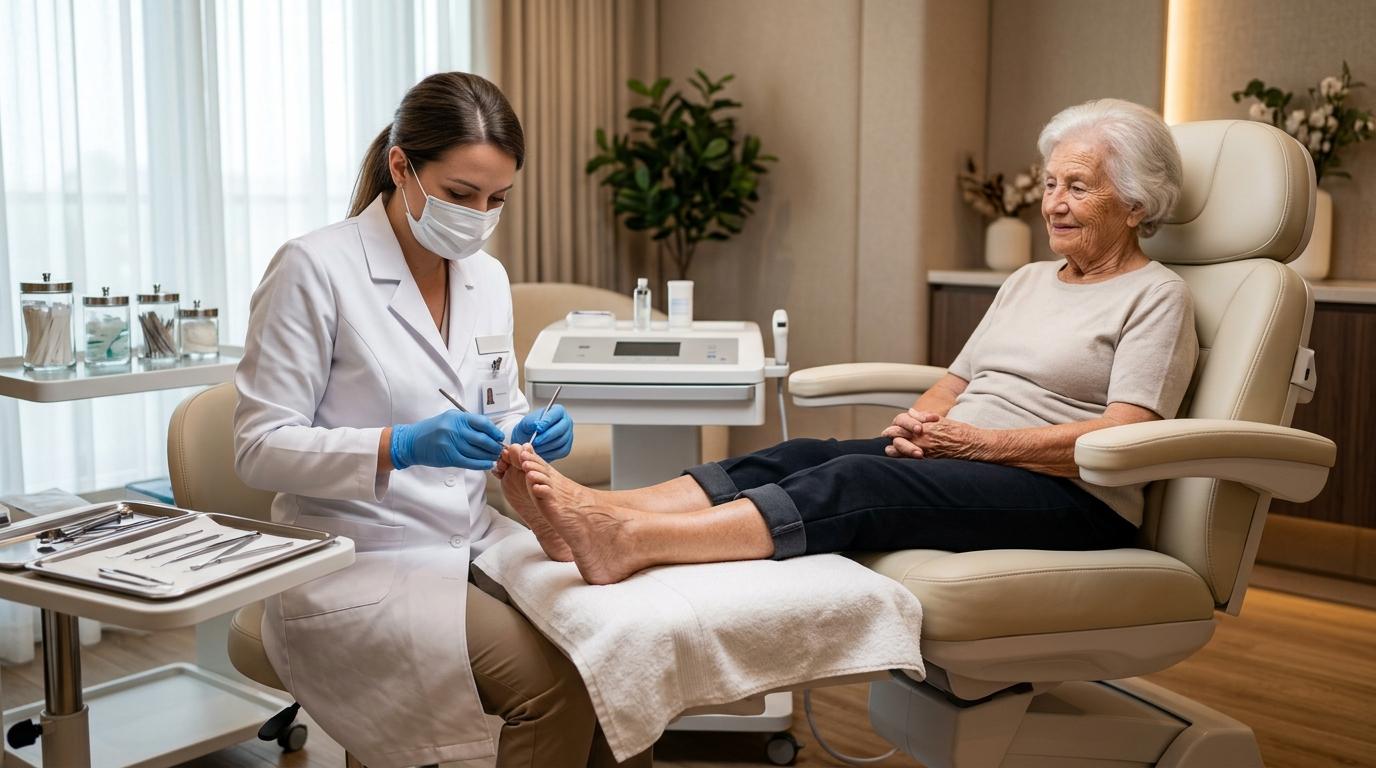
The Absolute Ban on Sharp Blades & Dry Rotary Technique
For diabetic individuals, nails must never be cut too short or rounded at the corners with sharp scissors or nippers. Using autoclave-sterilized rotary podology burs, our specialists shape nails straight across and smooth hardened skin painlessly without soaking.
- →Daily washing with lukewarm water and thorough drying between the toes
- →Seamless cotton socks and wide-toe supportive footwear to prevent friction
- →Monthly sterile podological checkups using dry-milling protocols
Preventing Dryness, Heel Fissures & Callus Pressure
Warm foot-soak tubs in traditional salons overly soften tissue and raise hygiene risks. At Simetri Beauty Center in Gebze, dry podological milling removes dead keratin layers gently and seals moisture with protective urea-based care.
- →Zero-blade heel fissure smoothing without irritating live skin
- →Careful thinning of thickened nail plates to relieve shoe pressure
- →Single-use files and sealed autoclave-sterilized stainless steel instruments
Gebze Medical Foot Care & Podology
Explore autoclave-sterilized care, private male VIP rooms and painless 3TO brace protocols.
Frequently Asked Questions
Can diabetic individuals use over-the-counter corn plasters?
Strictly avoid them. Salicylic acid patches can burn sensitive skin and trigger deep tissue irritation.
How often is protective diabetic foot care recommended?
A routine session every 4 weeks helps keep nail edges smooth and prevents pressure calluses from building up.
Related Guides
Consult Our Expert
Contact us now for a personalized care protocol and appointment details.